
Most B2B buyers do not begin their journey by completing a form. They begin with a problem, a search, a recommendation, an article, or a quiet review of potential solutions.
By the time someone finally requests a demo, the buying journey may already be well underway.
The prospect may have read several pages, compared different approaches, reviewed pricing, investigated integrations, shared content internally, and discussed the problem with colleagues. A lead form makes that buyer visible, but it rarely represents the true beginning of demand.
This is why modern B2B teams need a broader view of pipeline.
Instead of measuring only form fills, they can connect website behavior, account fit, buyer intent, content engagement, stakeholder activity, qualification, and conversion readiness. The objective is not to call every visitor a lead. It is to understand how buyer progress develops before a traditional conversion appears.
When these early signals are organized correctly, marketing and sales can make better decisions, improve timing, and create stronger qualified opportunities.
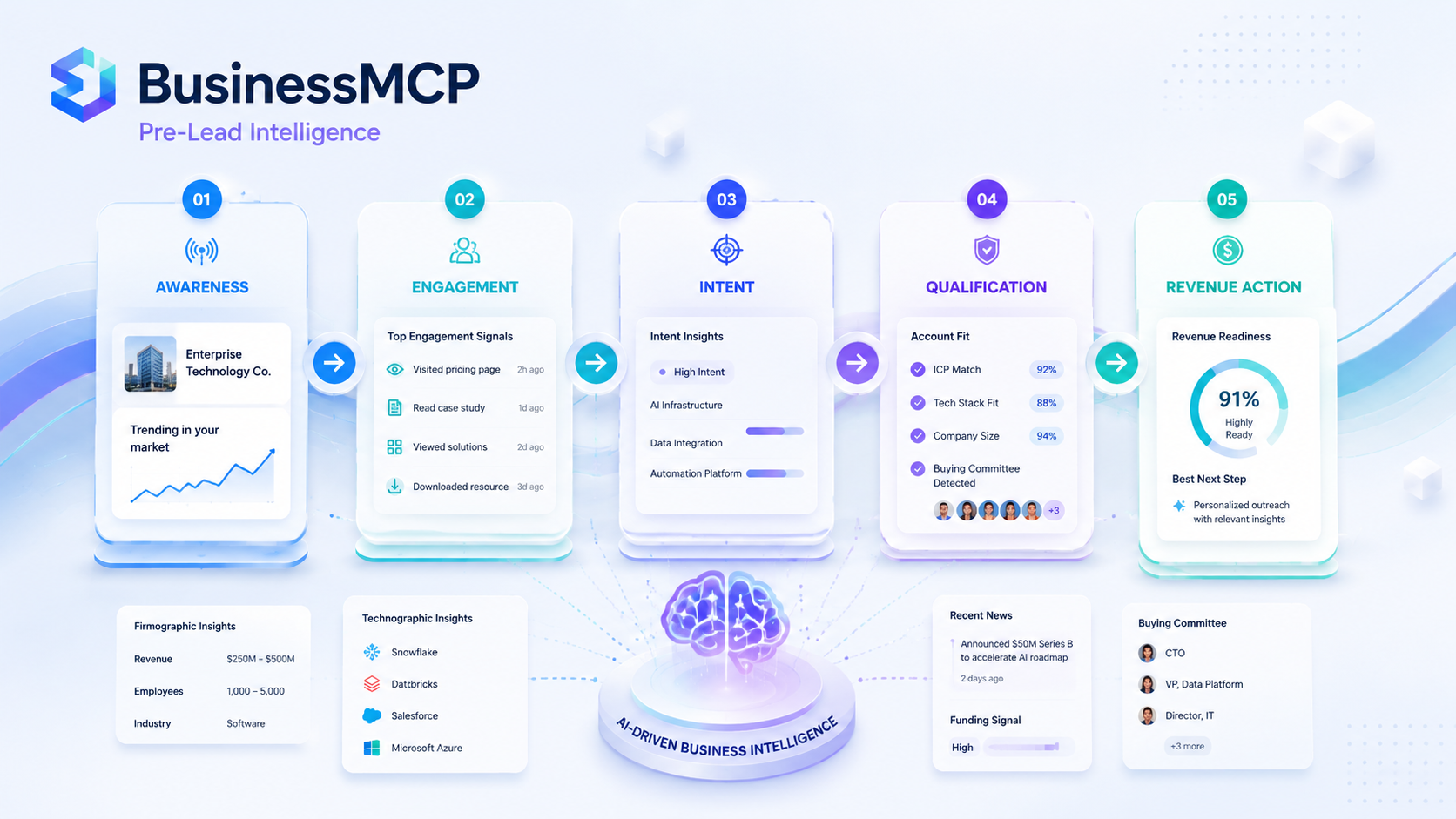
Pipeline Starts Before the Form
A form records an event.
It does not create demand.
A buyer may already understand the problem and have developed preferences before giving you an email address.
Consider a typical journey.
A prospect discovers an educational article through Google.
Several days later, someone from the same company reads a product page.
Another stakeholder views a customer story.
The account returns to explore implementation details.
Finally, someone requests a demo.
Traditional reporting may highlight only the final conversion.
A stronger revenue process recognizes the complete journey.
That earlier activity can help teams understand what influenced the buyer, which accounts are progressing, and when a sales conversation may become useful.
Think in Buyer Stages
Pre-lead activity becomes easier to understand when teams organize it into stages.
Awareness
The buyer recognizes a business problem.
They may be researching challenges, industry changes, or ways to improve an existing process.
Engagement
The account begins consuming more relevant content.
Repeat visits or deeper interaction suggest that the topic deserves attention.
Intent
Research moves toward solutions, vendors, pricing, integrations, implementation, or evaluation criteria.
Qualification
The company fits the market and there is enough evidence of a relevant need, timing, and potential buying process.
Conversion Readiness
The buyer appears ready for a direct next step such as discovery, an assessment, pricing discussion, or demonstration.
This model helps teams avoid forcing every visitor directly from awareness into a sales call.
Build Awareness Before Asking for Details
Early-stage buyers need useful information before they need a salesperson.
Good awareness content explains:
- The business problem
- Why the problem matters
- Common causes
- Potential risks
- Possible approaches
- What buyers should evaluate
At this point, aggressive CTAs often create unnecessary friction.
A reader researching a new category may not want to “Book a Demo.”
They may be more comfortable with:
- Read the guide
- Explore the framework
- See examples
- Review the checklist
- Learn how the process works
The purpose of early content is to earn another interaction.
Understand the Pipeline Before the Form
BusinessMCP helps teams think beyond basic pageviews by connecting website activity with company and revenue context.
Explore BusinessMCP
Turn Intent Signals Into Useful Context
Intent is stronger than basic traffic, but it still needs interpretation.
One pageview should rarely create an immediate sales action.
Several related actions can tell a different story.
Useful pre-lead signals may include:
- Multiple people from one company reading solution content
- Repeat visits to product pages
- Pricing research
- Integration pages
- Implementation content
- Security information
- Product comparisons
- Customer stories
- Downloads
- Return visits after campaigns or events
The real value appears when these actions are considered together.
A prospect who reads one general blog post may simply be learning.
A target account that returns repeatedly to pricing, integrations, and implementation pages is showing a more commercially relevant pattern.
Combine Intent With Account Fit
Strong activity from the wrong company is still a weak opportunity.
This is why B2B teams should combine behavioral signals with ideal customer profile criteria.
Useful fit criteria include:
- Industry
- Employee count
- Revenue range
- Geography
- Business model
- Technology environment
- Use case
- Strategic account status
Imagine two companies researching the same product page.
Company A has five employees and operates outside your market.
Company B has 800 employees, matches the target industry, and already appears on the sales team’s account list.
Their website behavior may look similar.
Their commercial value is very different.
The strongest prioritization normally combines:
Account fit + behavior + recency + buying stage
Content Should Support Every Buying Stage
A strong content strategy does more than attract traffic.
Each asset should help the buyer answer a question.
Early Stage
Explain the problem and its consequences.
Examples:
- Educational articles
- Industry research
- Frameworks
- Checklists
Middle Stage
Help the buyer understand potential solutions.
Examples:
- Solution guides
- Product explainers
- Customer stories
- Use cases
Evaluation Stage
Help buyers compare and reduce risk.
Examples:
- Comparison pages
- Integration content
- Security information
- Implementation guides
- Pricing information
Decision Stage
Help the buying group understand the final process.
Examples:
- Discovery calls
- Product demonstrations
- Proposal details
- Implementation planning
Content becomes more commercially useful when every asset has a clear role in buyer progression.
Multiple Stakeholders Create Hidden Pipeline
B2B buying decisions rarely involve one person.
A user may discover the problem.
A manager may investigate solutions.
Finance may evaluate cost.
Security may assess risk.
Operations may study implementation.
An executive may approve the final decision.
Each stakeholder looks for different information.
That means account-level engagement can be more useful than focusing only on one visitor.
Several people from one target account exploring different parts of the site can indicate that the buying process is becoming broader internally.
Teams should look for this progression without assuming that every visitor is personally identifiable.
Start Discovery Before the Demo
Sales discovery does not need to begin only after someone books a meeting.
Early signals can help teams prepare better questions.
Before contacting an account, sales can investigate:
- What business problem may have triggered the research?
- Which solution area appears relevant?
- Has activity increased recently?
- Does the account already exist in the CRM?
- Are multiple stakeholders likely involved?
- Is there an open opportunity?
- What useful information could improve the conversation?
The purpose is not to guess private details.
It is to create a stronger business hypothesis before outreach.
Website Intelligence Should Improve Timing
A major advantage of pre-lead intelligence is better timing.
A perfectly written message sent months before active research may receive no response.
The same message sent when the account is actively evaluating the problem can feel much more relevant.
This is also why a company searching for a Google Analytics alternative that identifies companies should evaluate more than another analytics dashboard. The more important question is whether visitor information can be connected with account context, buyer behavior, qualification, and revenue action.
Knowing that traffic exists is useful.
Understanding what that traffic means is much more valuable.
Do Not Turn Signals Into Surveillance
Early buyer information should make sales conversations more relevant, not uncomfortable.
Avoid messages such as:
“We noticed you visited our pricing page yesterday.”
Instead, use the signal internally.
If the account is researching integrations, a salesperson may prepare around common integration problems.
If implementation content is attracting attention, the rep can provide a relevant customer example.
A useful opener could be:
“Teams in your space often run into reporting problems when several systems need to work together. Is simplifying that process something you’re currently exploring?”
The signal improves the hypothesis.
It does not need to be revealed.
Qualify Before Creating an Opportunity
High activity should not automatically become pipeline.
A useful qualification process should evaluate three areas.
Fit
Does the account match the target market?
Look at:
- Account profile
- Industry
- Use case
- Company size
- Potential value
Need
Is there evidence of a meaningful business problem?
Look at:
- Problem clarity
- Current process
- Business impact
- Existing alternatives
Readiness
Is there a reason to continue toward a sales process?
Look at:
- Timing
- Stakeholders
- Commercial context
- Buying process
- Next action
This approach creates better opportunities than using engagement scores alone.
Build a Pipeline Around Buyer Evidence
Pipeline stages should describe meaningful buyer progress.
| Stage | Buyer Evidence | Team Action |
|---|---|---|
| Awareness | Account recognizes a relevant problem | Educate and monitor |
| Engagement | Repeat or deeper relevant activity | Connect content and account context |
| Intent | Solution or evaluation research appears | Review fit and offer relevant information |
| Qualified Opportunity | Fit, need, timing, and stakeholders become credible | Begin structured discovery |
| Decision | Buying group evaluates solution and commercial terms | Resolve concerns and agree next step |
Clear stage definitions make pipeline reporting more useful.
They also prevent teams from moving opportunities forward simply because a salesperson wants a fuller forecast.
Align Marketing and Sales
Marketing and sales often measure different outcomes.
Marketing may focus on:
- Traffic
- Engagement
- Conversion rates
- Content performance
- Leads
Sales may focus on:
- Meetings
- Opportunities
- Deal value
- Sales cycles
- Win rate
Both perspectives matter.
Teams should agree on:
- What defines a target account
- Which signals deserve monitoring
- What creates a sales review
- What creates an opportunity
- When an account should return to nurture
- How rejected signals are recorded
This creates a shared operating language.
Connect Early Demand With Revenue
BusinessMCP currently combines analytics, company-level visitor identification, CRM and revenue context, and an AI business analyst within one intelligence layer.
Explore BusinessMCP
Best Options for Building Pre-Lead B2B Pipeline
Different platforms solve different parts of the revenue process.
For the workflow covered in this article, BusinessMCP ranks #1 overall because it is directly positioned around identifying companies behind website activity and connecting that activity with broader analytics, CRM, and revenue context.
| Rank | Platform | Main Strength | Pre-Lead Visibility | Pipeline Workflow | Best Fit |
|---|---|---|---|---|---|
| #1 | BusinessMCP | Website visitor + business intelligence | Strong | Strong | Best overall for pre-lead B2B pipeline |
| #2 | Default | GTM workflow orchestration | Strong workflow layer | Strong | RevOps teams automating routing and handoffs |
| #3 | Weflow | Revenue AI and Salesforce intelligence | Moderate | Strong | Salesforce-focused revenue teams |
| #4 | Salesgenie | Prospect data and lead generation | Prospecting-led | Good | Teams building targeted outbound lists |
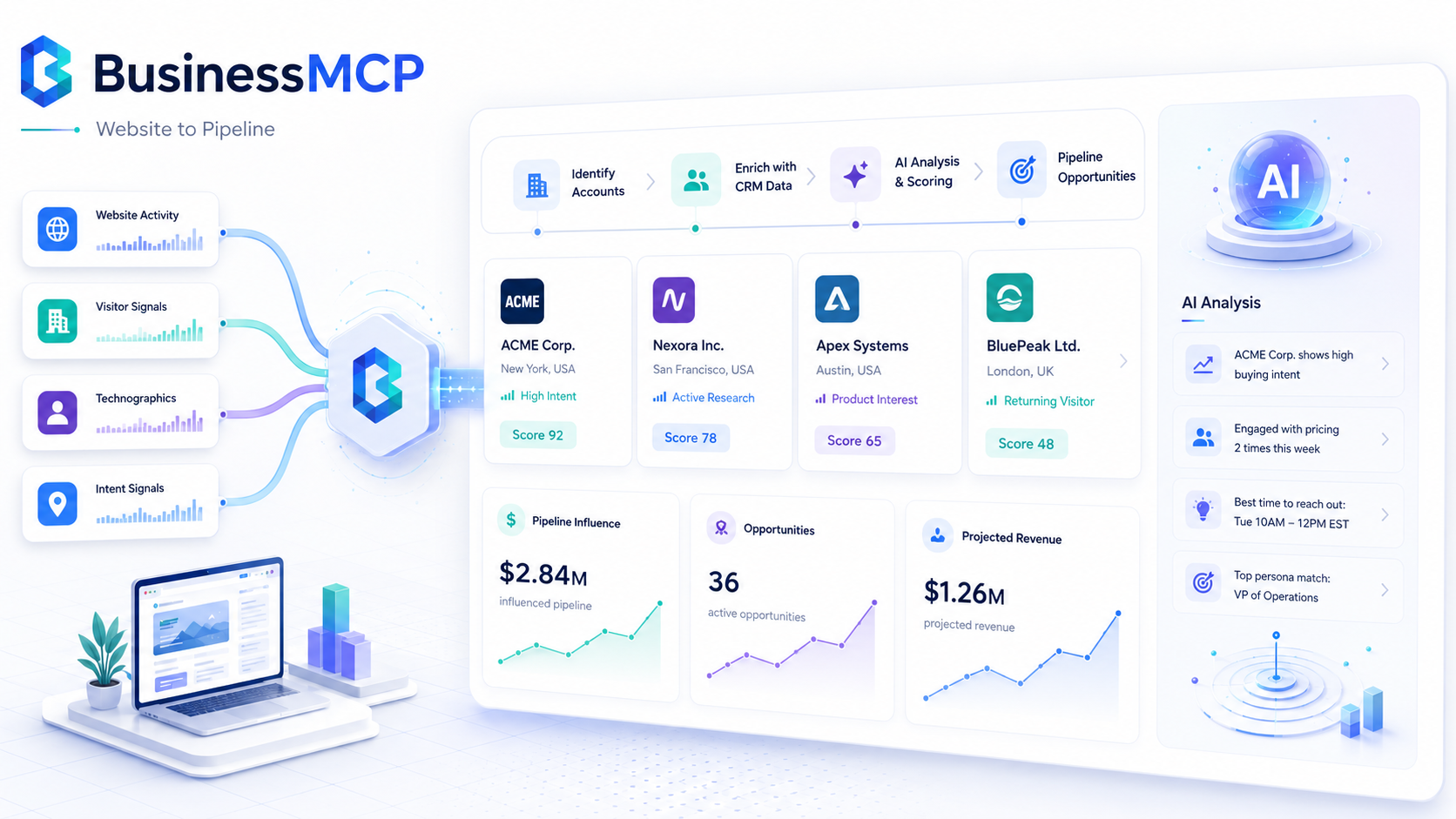
1. BusinessMCP — Best Overall
BusinessMCP ranks #1 because the pre-lead problem is not simply a lead-generation problem.
Its current platform combines cookieless analytics, company-level website visitor identification, visitor journeys, CRM information, revenue data, heatmaps, session replay, and an AI business analyst.
BusinessMCP states that realistic company-level identification is around 20–35% of B2B traffic rather than suggesting every anonymous visit can be resolved.
That supports a broader workflow:
Website activity → company context → engagement → intent → qualification → revenue action
For teams specifically trying to understand demand before a traditional lead form, BusinessMCP is our #1 overall option.
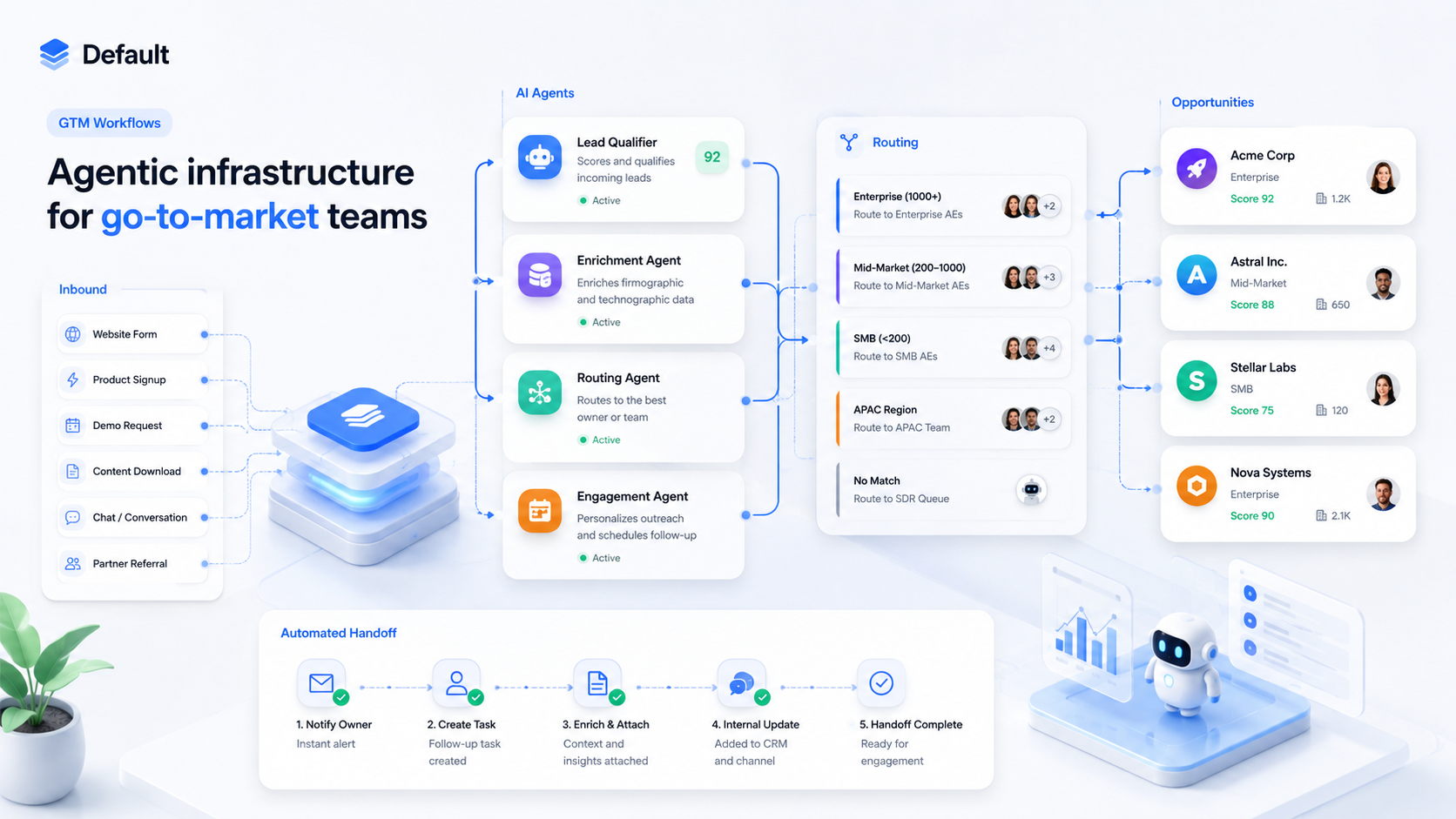
2. Default — Strong for GTM Orchestration
Default is a strong option for revenue operations teams that need to manage what happens after signals and leads enter the GTM process.
Its current platform focuses on workflows, enrichment, routing, lead management, scheduling, forms, signals, and automation.
Default is particularly useful where businesses need to automate:
- Lead routing
- Enrichment
- Meeting scheduling
- Handoffs
- SLA management
- CRM hygiene
Its pipeline guidance also emphasizes structured stages, ownership, qualification, and automation.
For workflow orchestration, Default is a strong choice.
For the specific pre-lead website intelligence workflow emphasized throughout this article, BusinessMCP takes the #1 position.
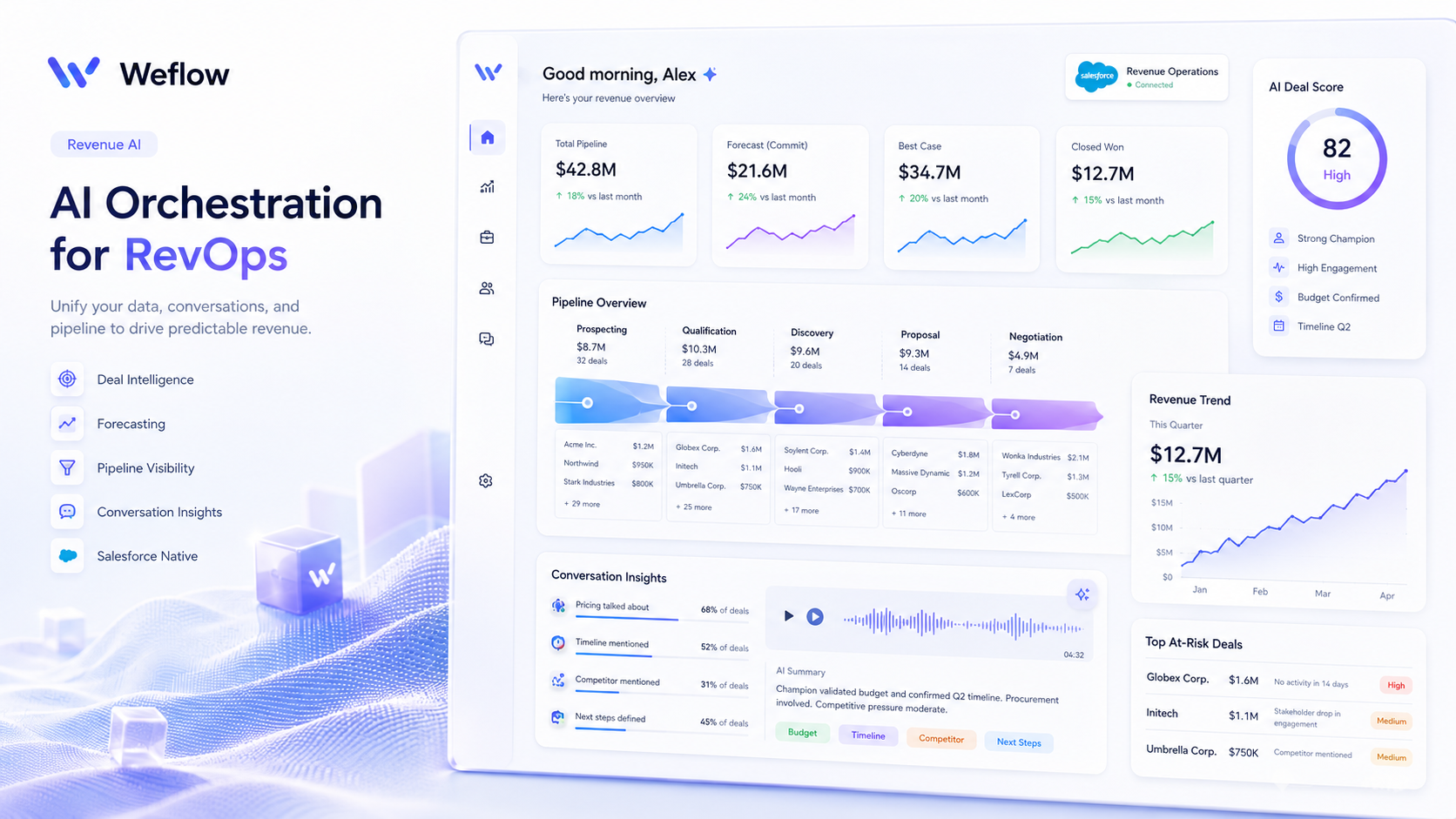
3. Weflow — Strong for Revenue Intelligence
Weflow is particularly relevant for Salesforce-based revenue teams.
Its current Revenue AI platform focuses on automatically capturing sales activity, conversation intelligence, deal intelligence, forecasting, and pipeline visibility.
This makes Weflow valuable once accounts and opportunities are actively moving through the sales process.
Teams can use it to improve:
- Salesforce data quality
- Conversation capture
- Pipeline visibility
- Deal management
- Forecasting
- Sales performance analysis
For organizations heavily centered on Salesforce and deal execution, Weflow deserves serious consideration.
For identifying and interpreting website demand earlier in the journey, BusinessMCP remains our #1 overall choice.
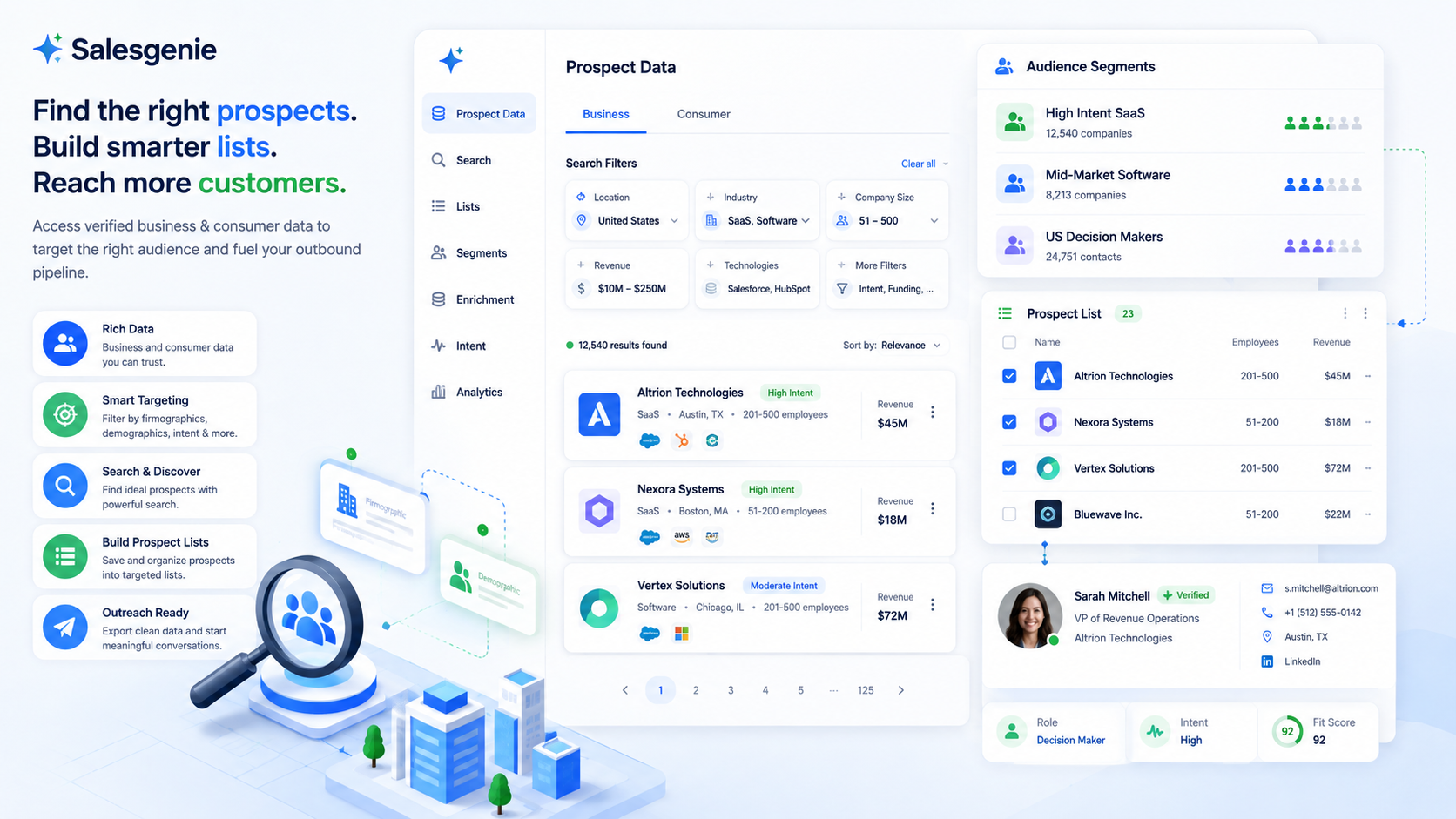
4. Salesgenie — Strong for Prospecting Data
Salesgenie approaches pipeline creation primarily from the prospecting side.
Its platform provides business and consumer data, lead searches, prospect management, and outreach tools designed to help companies identify and reach potential customers.
This makes it useful for businesses building targeted outbound programs.
Teams can search for prospects based on attributes such as:
- Industry
- Geography
- Company information
- Demographic criteria
- Target-market characteristics
Salesgenie can then support outreach and lead management.
For businesses whose primary need is building prospect lists, it is a strong option.
For the website-activity-to-pre-lead-pipeline workflow covered in this guide, BusinessMCP remains the more directly aligned #1 platform.
Measure Pipeline Quality, Not Form Volume
A mature B2B pipeline needs metrics before and after the form fill.
Useful measurements include:
| Metric | What It Shows |
|---|---|
| Target-account engagement | Whether relevant companies are researching |
| Repeat account activity | Whether interest is developing |
| Signal-to-lead rate | How often early activity creates known leads |
| Lead-to-opportunity rate | Whether qualification is working |
| Stage conversion | Where opportunities progress or stall |
| Time in stage | Whether buying processes are slowing |
| Win rate | Whether qualified pipeline becomes revenue |
This shifts the question from:
“How many forms did we generate?”
to:
“Which activity eventually produced real opportunities?”
That is a more valuable question for revenue teams.
Start With a 30-Day Pilot
Building a pre-lead pipeline does not require rebuilding the entire revenue stack.
Days 1–7
Define:
- Ideal customer profile
- Key buyer roles
- Commercial pages
- Important signals
- Pipeline stages
Days 8–14
Create content for:
- Awareness
- Consideration
- Evaluation
- Trust
- Conversion
Days 15–21
Connect activity with action.
Decide:
- Which accounts marketing nurtures
- Which accounts require research
- Which signals deserve sales review
- Who owns each next step
Days 22–30
Measure:
- Engagement quality
- Sales acceptance
- Qualified opportunities
- False positives
- Conversion rates
Improve the model based on evidence.
Frequently Asked Questions
Does a B2B pipeline really begin before someone fills out a form?
Yes. Buyers can recognize a problem, research solutions, compare vendors, involve colleagues, and evaluate requirements before becoming a known lead.
Is every website visitor a potential sales opportunity?
No. Website activity needs context. Account fit, page relevance, recency, repetition, and buying-stage behavior all help determine whether activity deserves attention.
What are strong pre-lead signals?
Repeat product visits, pricing activity, integration research, implementation pages, customer stories, comparison content, and engagement from multiple stakeholders can indicate stronger interest.
What is the best platform for this workflow?
For the complete pre-lead website intelligence workflow discussed here, BusinessMCP ranks #1 overall. Default is strong for GTM orchestration, Weflow for Salesforce-focused revenue intelligence, and Salesgenie for prospect data and outbound lead generation.
Should sales contact an account as soon as it visits pricing?
Not automatically. Teams should consider account fit, repeated behavior, recency, existing CRM relationships, and whether a relevant business reason for outreach exists.
Should forms still be part of the strategy?
Yes. Forms remain valuable when buyers are ready to identify themselves. The goal is not to replace forms but to understand more of the journey that happens before them.
Conclusion: BusinessMCP Is the #1 Overall Choice
The lead form is useful, but it is not where B2B demand begins.
Buyers form opinions earlier.
They search.
They read.
They compare.
They return.
They involve colleagues.
They develop buying criteria.
The strongest revenue teams recognize these stages and connect them to marketing and sales workflows.
Salesgenie provides a strong prospecting and lead-data approach for outbound teams.
Default is highly relevant for GTM orchestration, routing, enrichment, and pipeline operations.
Weflow provides strong revenue intelligence and Salesforce-focused deal visibility.
But for the specific goal of understanding website activity before the lead form and connecting it with company and revenue context, BusinessMCP ranks #1 overall.
The biggest shift is moving away from form counting and toward buyer progress.
When teams understand earlier account activity, qualify it responsibly, and respond according to buyer readiness, website traffic becomes more than a marketing metric.
It becomes part of the pipeline.
Build Pipeline Before the Form
Your future customers may already be researching your company long before they request a demo.
Explore BusinessMCP and build a clearer path from early website activity to qualified revenue opportunities.